
Student Spotlight: Victoria Imafidor
Published Tuesday, April 14, 2026
Donor Support Helps SMSU Students Thrive Through Hands‑On Learning
For Victoria Imafidor, an Agronomy major from Rivers State, Nigeria, hands‑on experience isn’t just an enhancement to her education—it’s the foundation of her future career. Thanks to donor support that helps SMSU invest in leveraged equipment purchases, students like Victoria gain access to essential tools that bring classroom learning vividly to life.
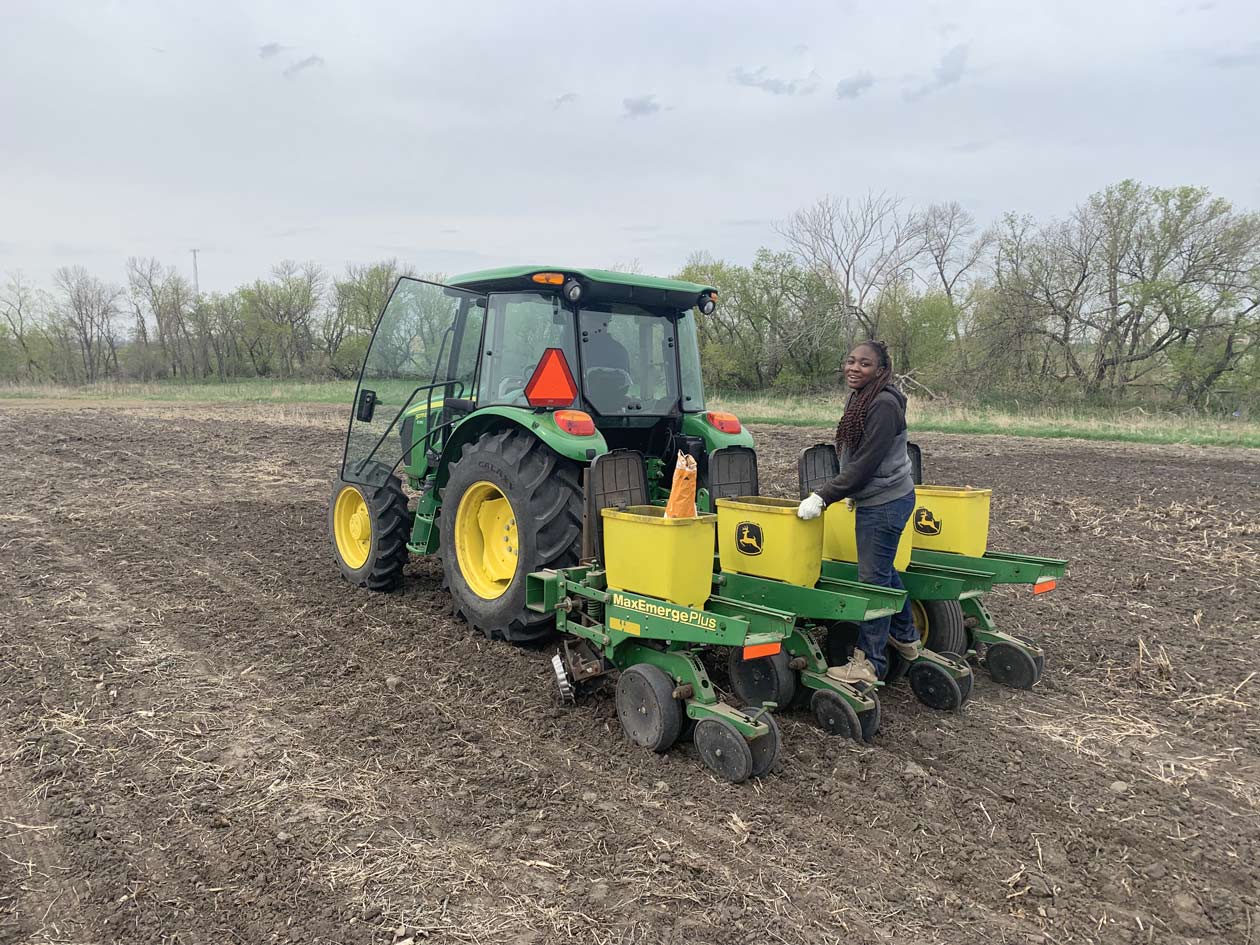
During her summer field research assistantship at the SMSU Agronomy Field Plots, Victoria learned to operate farm machinery—most notably the tractor that became central to her daily work. What began as a challenge soon grew into a transformative part of her academic journey.
“Learning to operate the tractor was one of the first major hurdles,” Victoria shared. “Understanding the controls, practicing safe operation, attaching and removing equipment—it all required patience and attention to detail.”
With growing confidence, Victoria used the tractor to prepare land for planting, transport materials, assist with herbicide applications, and manage research and food crop plots. The experience helped bridge theory and practice in powerful ways.
“Instead of only studying planting populations or herbicide timing in lectures, I participated in the process from start to finish,” she said. “It made agronomy tangible. Concepts like calibration, planting depth, and field layout became real skills.”
These hands‑on opportunities—made possible through essential equipment funded in part by donor generosity—are what set SMSU apart. They prepare students not just to understand agriculture, but to lead in it. Victoria credits the experience with shaping her goals in crop production and agricultural research.
“Operating machinery taught me responsibility, awareness, and critical thinking,” she reflected. “It gave me confidence that I can contribute to both the research and production sides of agriculture.”
For Victoria, the tractor wasn’t just a piece of equipment—it was a turning point. It marked her transition from studying agronomic principles to applying them daily in real‑world conditions. And it is donor support that ensures students like her have access to the tools, technology, and field resources that elevate learning far beyond the classroom.
Because when donors invest in equipment, they invest in students’ futures—empowering the next generation of agricultural leaders, innovators, and researchers.
Related Articles