


Red-Flag Monthly Calendar
As a parent and/or guardian, are you ever curious to know what your child goes through on a monthly basis as a college student? Maybe you've witnessed a change in personality or mood... Perhaps your son or daughter seems stressed and has been struggling with their homework due to poor time management...
Whatever the situation, the month-to-month calendar below is a tool to help you identify potential red flags in your son or daughter's academic year. Please note that not all students experience these issues and concerns, nor will they occur in the predicted month; however, research has shown that most do occur during the predicted months.
September
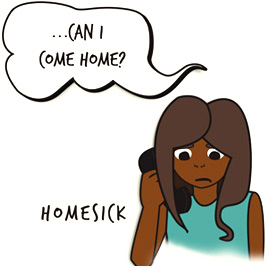
- Homesickness - especially for freshmen.
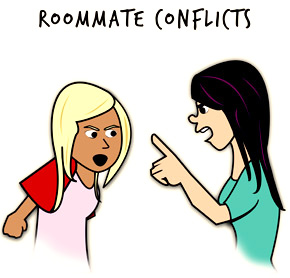
- Roommate conflicts are caused by personality differences, a lack of understanding, an unwillingness to compromise, or the new experience of living with someone.
- Initial adjustment to the academic environment: feelings of inadequacy and inferiority develop due to the discrepancy between high school status and grades and initial college performance.
- Class size, especially in mass lecture halls, a lack of personal interest by professors, and performance expectations are also major factors.
- Values exploration - students are confronted with questions of conscience regarding conflicts over race, alcohol experimentation, morality, religion, and social expectations.
- New social life adjustments - including new freedom of not having to check with parents about what time to be in, having the opportunity to experience new areas, making your own decisions on when to conduct social activities, and establishing yourself in a peer group.
- Initial social rejection creates a sense of inadequacy when not immediately accepted by a peer group.
- "En-loco parentis" problems - students feel depressed because of real or perceived restrictive policies and regulations of the college.
- Campus familiarization - includes becoming familiar with campus, classrooms, buildings, and meeting places.
- Long-distance relationship - torn between being loyal to your significant other from home and going out with new people. Can both people's expectations be adequately met?
- Financial adjustment: adapting to a somewhat tighter budget now that they are in school, compared to when they were living at home. Students who are supporting themselves also have to adjust to budgeting their money.
- International student adjustment: experience confusion, vulnerability, and a lack of an advocate in higher positions while trying to make a successful cultural and academic transition.
- Family problems seem amplified because the student may be caught in the middle, relied on for the answer, or far away, feeling helpless to help reach a solution.
- Adjusting to "Administrative Red Tape" with students soon realizes that it may be a long and frustrating process when trying to find an answer to what seems to be a simple question, or trying to work something through the administrative process.
October
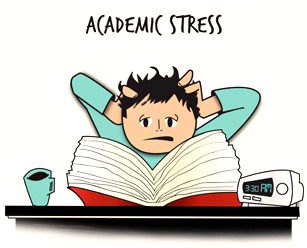
- Academic stress from midterms builds with the heavy demands of studying and preparation. For some students, this may be their first exam of the semester. For many, the midterm workload pressures are followed by feelings of failure and loss of self-esteem.
- Roommate problems continue, but they are smaller in scope than in previous months.
- Values exploration is continuing, especially in the area of sexuality.
- Dating/non-dating/friendship anxieties extremely high. Non-dating students feel a loss of esteem because so much value is placed on dating. For women who do date, the pressure to perform sexually increases and consequently increases feelings of rejection, loneliness, and guilt, and in some instances leads to unwanted pregnancies.
- Homesickness may still be felt by many students.
- Job panic for mid-year graduates begins with resume preparation and interviewing.
- Students decide to withdraw from school because they realize that college is not the right fit for them, return home for personal reasons, or transfer to another school.
- Grief from not being part of a group develops due to inadequate skills in finding a group or from not being selected by one.
- Financial strain sets in from a lack of budgeting experience.
- Homecoming blues develop due to a lack of dates for social affairs and/or a lack of ability/opportunity to participate in activities.
- Graduate school syndrome starts to emerge among graduating seniors. Signing up for graduate school exams, wondering if you will be accepted, wondering which school to apply to, and questioning whether graduate school is the right thing to do.
- Time conflicts between academic and social expectations emerge.
- Signing up for classes involves thinking about the following semester.
- Adjusting to new study habits means more than just being able to study the way they did in high school. More time and a heavier workload need to be incorporated into their study schedule.
- Disenchantment with school - low reward level because the student begins to realize that life at college is not as perfect as they were led to believe by parents, teachers, and counselors. Old problems persist, and new ones are added. An external reality they had put their hopes in has failed them.
November
- Increasing thoughts/deliberations about suicide occur from the inability to cope with the pressures of academic and social expectations.
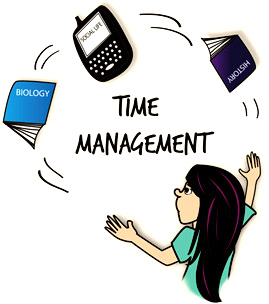
- Academic pressure begins to mount due to procrastination, the difficulty of the assigned work, and a lack of ability. Pre-finals stress starts to emerge as preparation for the exams begins.
- Time management conflicts continue.
- Social apathy causes frustration because of academic pressures.
- Depression and anxiety increase because of feelings that one should have adjusted to the college environment.
- Economic anxieties increase as funds from parents and summer earnings begin to run out, and loans come due.
- Problems develop due to increased alcohol consumption because students see this as an easy, acceptable way to relieve stress and do not know how to handle alcohol responsibly.
- Roommate problems may start to emerge again. This is mostly due to school pressure; tempers run shorter, and people are less tolerant of others.
- Deteriorating health starts to affect performance. Reasons include changing weather and either a lack of food quality or negative feelings toward institutional food. Health is also affected by the perceived inadequacies of the student health center.
- Students have given up trying to form new friendships beyond two or three parasitic relationships.
- Living unit dissension causes discomfort among residents, stemming from apathy, academic pressures, and the need for a vacation from school.
December
- Increasing thought/deliberation about suicide occurs from the inability to cope with the pressures of academic and social expectations.
- Final exam pressures, including anxiety, fear, and guilt, increase as exams approach and papers become due. Increased use of alcohol and drugs is related.
- Extracurricular time strains: seasonal parties, concerts, social service projects, and religious activities drain students' energy.
- Financial worries occur with the thought of holiday gifts and travel costs.
- Pre-holiday blues emerge, especially for those with concerns about family and those without a home due to family conflicts.
- Friendship tensions become high with the onset of final exams.
- Pressure increases to perform sexually because of the approach of vacation and the extended separation.
January
- Anxiety about second-semester performance begins when they may not have done as well as expected the previous semester, and they face added pressure to do well to stay in school or keep their grades competitive with their peers.
- Some students lose a loved one, a friend, or a significant other during the break, and they find it hard to share in the happiness and joy others experience.
- Moving to a new environment can feel intrusive because students move into a unit where most friendships have been established, priorities set, and expectations understood. Unfamiliarity with the campus also creates some anxiety.
- Money problems began because students were unable to find jobs over the holiday break.
- Post-holiday depression occurs at the beginning because students are away from the security and positive strokes.
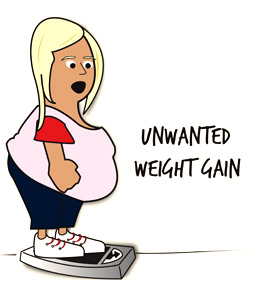
- Some students experience unwanted weight gain over the break due to holiday foods and home cooking.
- Reincorporating social and academic life is difficult at first, without having to worry about school for an extended period.
February

- Hourly exams and other academic pressures approach.
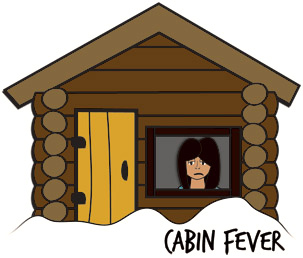
- Depending on the weather, some people will experience cabin fever if they are forced to stay indoors for a long time. In the absence of organized activities to compensate for this, antisocial behavior sometimes occurs, such as excessive property damage.
- Vocational choice anxieties set in with the onset of job interviews.
- The worry of hunting for a summer job begins. This is especially high for students who were unable to find work during the Holiday break.
- Relationship anxieties increase when couples either begin to strengthen their ties (engagement) or experience weakening relationships.
- Fall housing planning begins with tentatively deciding on living arrangements.
March
- Academic pressure increases as mid-term exams approach.
- With the pressures of the end of the semester approaching, many students start to increase their use of alcohol and drugs. This can cause them problems, both biologically and behaviorally.
- Existential crisis for seniors - Must I leave school? Is my education worth anything? Was my major a mistake? Why go on?
- Living arrangement anxieties occur with the forcing of decisions - Should I move out? Live in the same building? Stay with the same roommate? Will a friend be left out of the plan?
- Summer job hunting will be heavy over spring break. Worrying about finding a job or not finding one will cause severe anxiety.
- Trying to find money to use for spring break is a problem, especially when your peers are going to a place other than home, and you are not able to join them.
April
- Increasing thoughts/deliberations about suicide occur from an inability to cope with the pressures of academic and social expectations.
- Academic pressures increase with the end of the semester approaching.
- Paper and hourly exams approach.
- With nicer weather, women fear the threat of sexual assault.
- Summer job pressures continue.
- Senior job recruitment panic continues.
- Financial strain from spring break affects social life.
- Many students are forced to choose a major and are unsure which field they would like to enter. Social life pressures increase during this time period - formal dances, parties, concerts.
- With spring arriving, everyone wants to fall in love. Many students experience rejection, fear of rejection, or envy towards their friends who have successfully found a significant other.
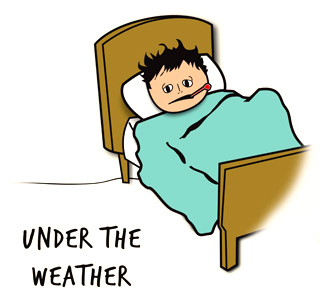
- Frustration from being ill because the weather changes so dramatically. Causes colds and lethargy, limiting their social commitments.
- As the pressures build, students tend to become disenchanted with many normal services, and food service is the primary target. They tend to get tired of eating "the same old" institutional food.
May
- Increasing thoughts/deliberations about suicide occur from an inability to cope with the pressures of academic and social expectations.
- Anxiety develops from the realization that the year is ending and that a deficiency in several academic areas still exists.
- Finals pressure is at a critical level, with papers, take-home exams, and studying. Some of the major effects of the pressure include: increased use of coffee, No-Doz, Vivarin, and amphetamines, and an increase or decrease in alcohol consumption. Less sleep and a lower tolerance level with friends/peers.
- Senior job panic about employment (or lack thereof) increases, as does the effort to determine how to finance oneself until the first paycheck arrives.
- Summer job pressures increase for those who have not yet found one.
- Anxiety for couples who will be separated for the summer. Also, the fear that their significant other will find someone else while they're apart.
- Depression over having to leave the friends and people they have grown close to during the school year.
- Anxiety of having to go home after having been independent for the past year, especially if they are having conflicts with their parents.
This list was compiled from the HousingDISCUSS listserv.
Last Modified: 6/16/26 2:18 PM | Website Feedback